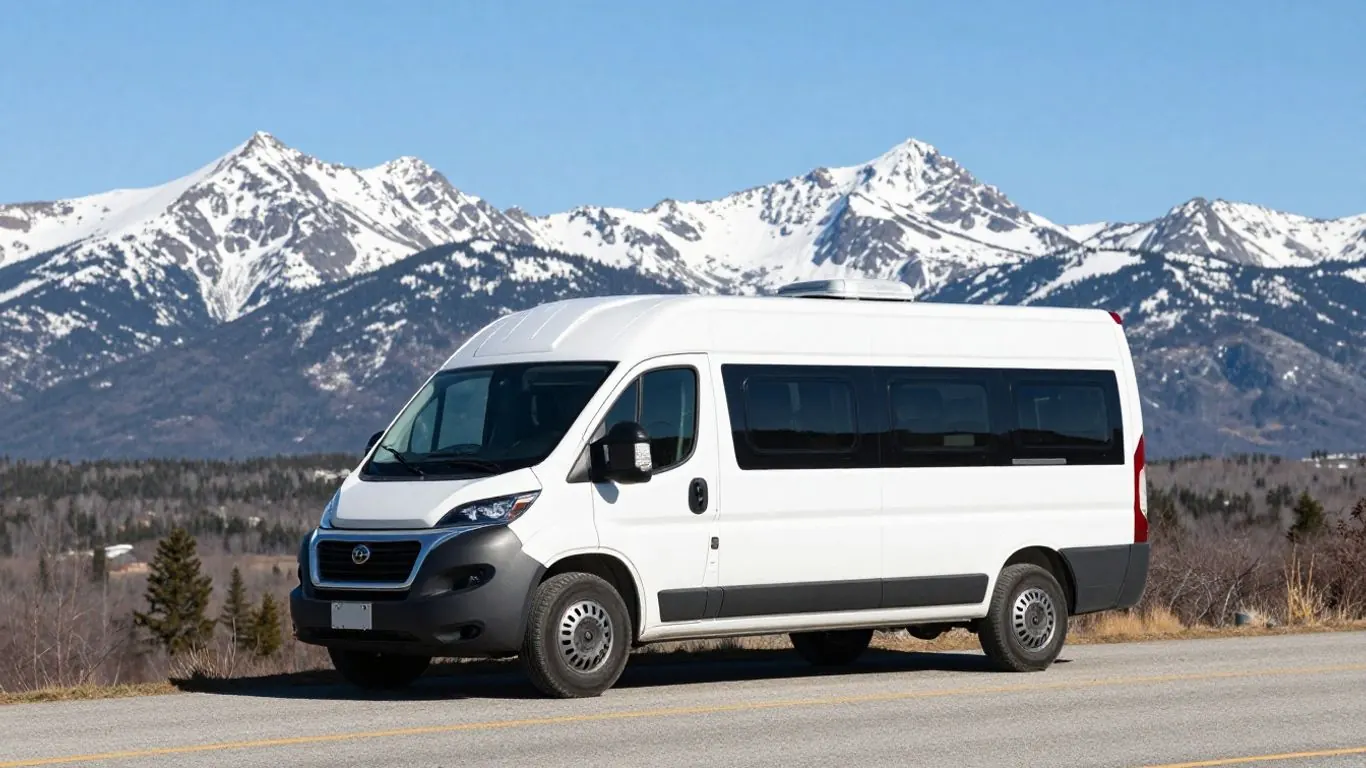
For most motorhomes, the best Banff campgrounds are Tunnel Mountain (Trailer Court for full hookups, Village II for power) near Banff town and the Lake Louise hard-sided campground for power near the lakes. Two Jack Lakeside and Two Jack Main are the scenic, unserviced choices, but they only suit RVs up to about 8 metres (27 feet). Pick by vehicle length first, then by hookups and location.
All details below come from Parks Canada's Banff camping page; check it again before you book, since dates and site types can change.
The comparison at a glance
| Campground | Sites | Hookups | Max RV length | Season | Best for |
|---|---|---|---|---|---|
| Tunnel Mountain Trailer Court | 322 | Full hookup (15 and 30 amp) | Up to 15 m (50 ft) | Spring to early October | Large motorhomes wanting water, sewer and power near town |
| Tunnel Mountain Village II | 209 | Electrical only (15, 30 and 50 amp) | Up to 12 m (40 ft) | Year-round | Power plus campfires, close to town |
| Tunnel Mountain Village I | 618 | None | Limited number of large sites | Mid-May to early October | Traditional camping with fire pits |
| Lake Louise hard-sided | 189 | Electrical (15, 30 and 50 amp) | Shared double-length sites suited to units up to 15 m (50 ft) | Year-round | Lake Louise, Moraine Lake and the Icefields Parkway |
| Two Jack Lakeside | 74 | None | Up to 8 m (27 ft) | Late May to early October | Small RVs and campervans wanting a lakeside setting |
| Two Jack Main | 380 | None | Up to 8 m (27 ft) | Late June to early September | Rustic, quieter camping near Lake Minnewanka |
Season windows are approximate and set each year by Parks Canada; confirm exact opening and closing dates for your travel year.
Tunnel Mountain: the practical base
Tunnel Mountain sits on a bench above the town of Banff, 2.5 km from town for Village II and the Trailer Court and 4.5 km for Village I. All three have public transit stops, which means you can leave the motorhome plugged in and ride into town instead of hunting for RV parking downtown.
Trailer Court
This is the only full-hookup option in the park and the one we suggest for larger Class C and Class A motorhomes. Some sites accommodate RVs longer than 15 metres. The trade-offs: campfires are not permitted, sites are either single or shared, and each site allows one vehicle and one wheeled camping unit, so a towed car counts.
Village II
Village II gives you power without water and sewer, and some sites take RVs of 12 metres or more. Parks Canada lists 85 electrical sites with fire pits, so if a campfire matters, select a fire site when you reserve. It is open year-round and is not designed for summer tent camping, which keeps it RV-focused.
Village I
The large unserviced loop has fire pits, showers and a sani-dump. It works well for campervans and smaller motorhomes that can run on batteries and fresh-water tanks for a few nights. Note that J loop is a no-fire loop.
Lake Louise hard-sided: power by the lakes
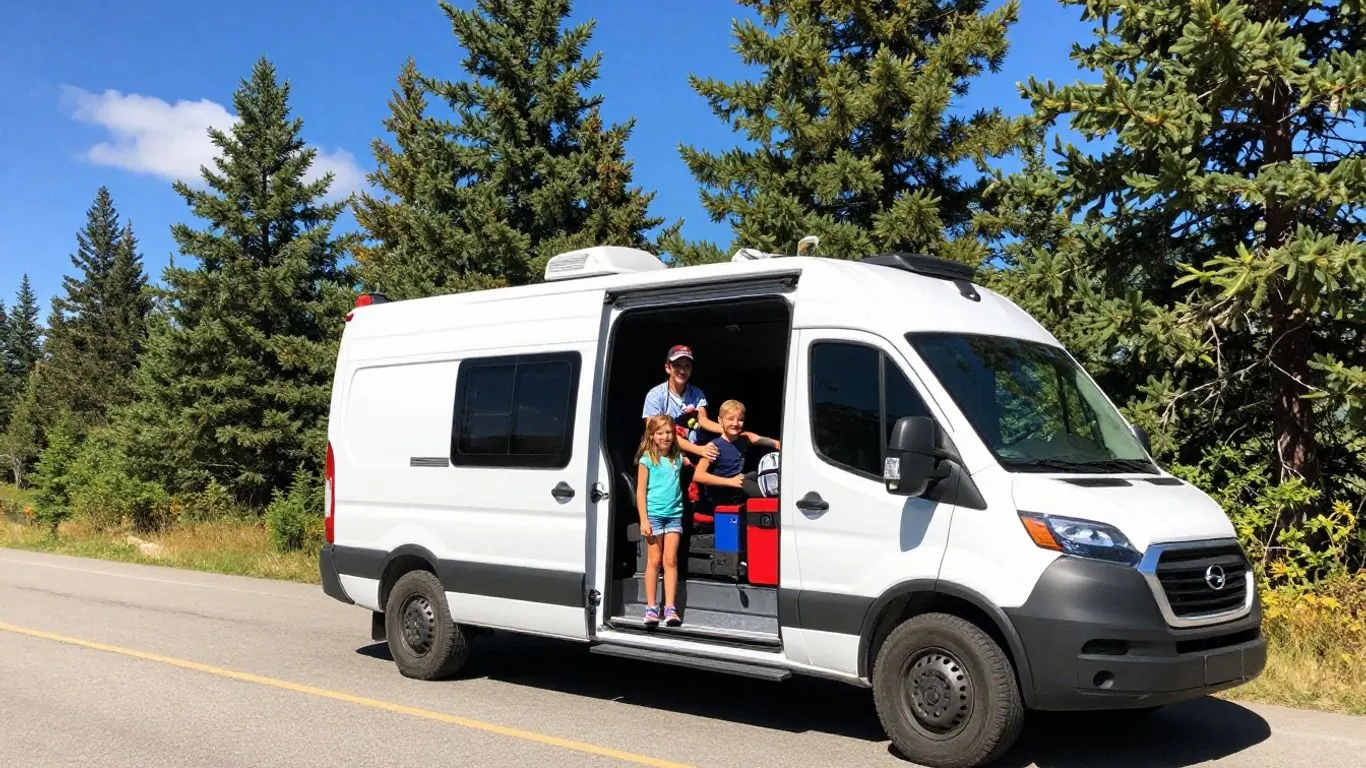
The Lake Louise campground is about 60 km north-west of Banff town and puts you close to Lake Louise, Moraine Lake and the start of the Icefields Parkway. The hard-sided section has 189 electrical sites, showers, a sani-dump and evening interpretive programs at the campground theatre.
- Hard-sided units only. Tents, tent-trailers and units with soft-sided pop-outs must use the separate soft-sided campground inside an electric fence, because of seasonal bear activity. Most rental motorhomes qualify for the hard-sided section, but check your unit if it has fabric pop-outs.
- Shared double-length sites. Sites are designed in pairs, so you may share a pad with a neighbour.
- Rail noise. The hard-sided section runs along the Canadian Pacific rail line. Light sleepers should pack earplugs.
- Fire and no-fire sites exist here too; pick the one you want when booking.
Parks Canada highly recommends reservations here, and summer dates fill early.
Two Jack Lakeside and Two Jack Main: scenery over services
Both Two Jack campgrounds are about 10 km from Banff town near Lake Minnewanka, and both have a strict RV limit of one unit up to 8 metres (27 feet) per site. That rules out most large rental motorhomes but suits campervans and compact Class C units.
- Two Jack Lakeside is one of Banff's most popular campgrounds: 74 sites on the shore of Two Jack Lake, some lakefront, with showers, flush toilets and cooking shelters. It also has a walk-in tent area, so expect a mix of campers.
- Two Jack Main is larger, more rustic and more secluded, with flush toilets and a sani-dump but no showers. Parks Canada suggests the Banff Upper Hot Springs, where showers are included with entry.
Neither has accessible facilities, according to Parks Canada, so travellers who need them should look at Tunnel Mountain or Lake Louise.
Rules that affect RV campers
- Occupancy: a maximum of six people per site, and one RV per site. Vehicle and tent limits vary by campground.
- Generators: allowed only from 9 to 10:30 a.m. and 5 to 7 p.m. If you need steady power for medical equipment or heating, book an electrical site.
- Check-in and check-out: check-in runs 2 to 8 p.m.; check out or re-register by 11 a.m.
- Maximum stay: 14 nights.
- Quiet hours: 11 p.m. to 7 a.m.
- Bare campsite program: nothing that attracts wildlife may be left out, including coolers, dishes and pet food. Staff may remove items and permits can be revoked.
- Fire permits: sold with your reservation or at the kiosk, and fire bans can be introduced at short notice, so carry a stove.
- Park pass: you need a national park entry pass in addition to the camping permit.
How to book and which to choose
Banff campgrounds are reserved through the Parks Canada Reservation Service, online or by phone. Parks Canada opens bookings for the coming season in winter, with launch dates by park posted in advance and a queue system on busy launch days. For July and August, plan to book on launch day.
- Confirm your vehicle's length with the rental company, including any bike rack.
- Over 8 m: focus on the Trailer Court, Village II or Lake Louise hard-sided.
- Need full hookups: the Trailer Court is the only option.
- Want campfires and power: Village II or Lake Louise, choosing a fire site.
- Campervan or compact RV: Two Jack Lakeside for scenery, then Tunnel Mountain to recharge and dump tanks.
If the big three are full, Protection Mountain on the Bow Valley Parkway is reservable and suited to motorhomes up to 10 metres (35 feet), though it is unserviced and RVs use the sani-dump at Lake Louise.
Planning notes
Split your stay: two or three nights at Tunnel Mountain for Banff town, then two at Lake Louise before heading north. Our Banff to Jasper planning guide covers the drive between parks, and the campgrounds and RV parks overview explains hookups and private-park alternatives. Most clients pick up in Calgary; see why Calgary works for the Rockies. Far & Away Adventures can line up your motorhome dates with campground launch days so the bookings match.
Frequently asked questions
Which Banff campground has full hookups?
Tunnel Mountain Trailer Court is the full-hookup campground in Banff National Park, with water, sewer and 15 or 30 amp power. Village II and Lake Louise hard-sided offer electricity only.
Can I camp at Two Jack Lakeside in a large motorhome?
Only if your unit is 8 metres (27 feet) or shorter. Longer motorhomes should book Tunnel Mountain or Lake Louise and visit Two Jack Lake as a day stop.
Is there camping in Banff in winter?
Yes. Tunnel Mountain Village II and the Lake Louise hard-sided campground are listed as open year-round, both with electrical sites. Winter RV travel needs a winterized rental, so check that with your rental company first.
Use this guide for trip ideas, not a current quotation or a guarantee of access, safety, inclusions or availability. Confirm the requirements and conditions for your dates, destination and provider before booking.