Travel guide
Plan a Canada RV holiday from the constraints that cannot safely be guessed: your available days, driving experience, party needs, vehicle agreement, overnight-stop type and current conditions. A route map is only a starting point; providers and authorities must confirm the details for your dates.
Decide the trip shape before reserving
- Choose a realistic start and finish point, then allow time for vehicle collection, orientation, fuelling, rest stops and the return process.
- List the travellers, sleeping arrangement, luggage, mobility requirements and any equipment needs so the vehicle and campsite can be checked directly with the provider.
- Choose each overnight stop by its actual operating period, vehicle suitability, services and reservation rules—not by a generic route article.
- Build flexibility into the itinerary. Weather, road works, wildlife, fires, closures and operator changes can alter a plan.
Check park camping and services at the destination level
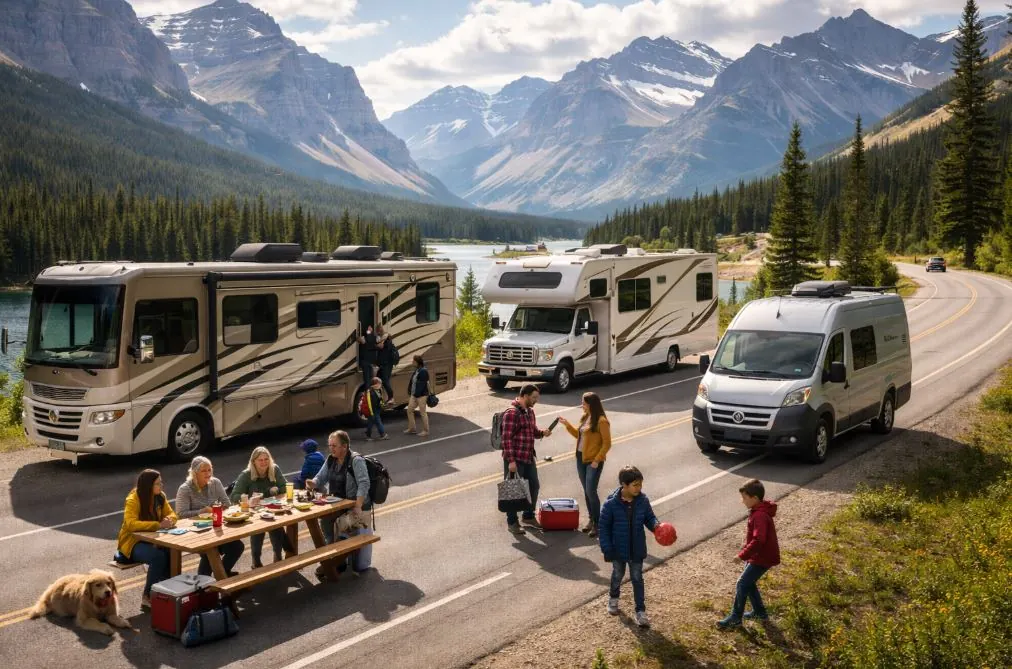
Parks Canada explains that camping options, services and reservation processes differ by location. Use the current destination page and reservation service to confirm the type of site, equipment limits, operating period and applicable rules before payment. A campground shown on an old map is not proof that it is open or suitable for your RV.
Parks Canada: camping and overnight accommodations
Parks Canada: how to make reservations
Recheck road and weather information before moving
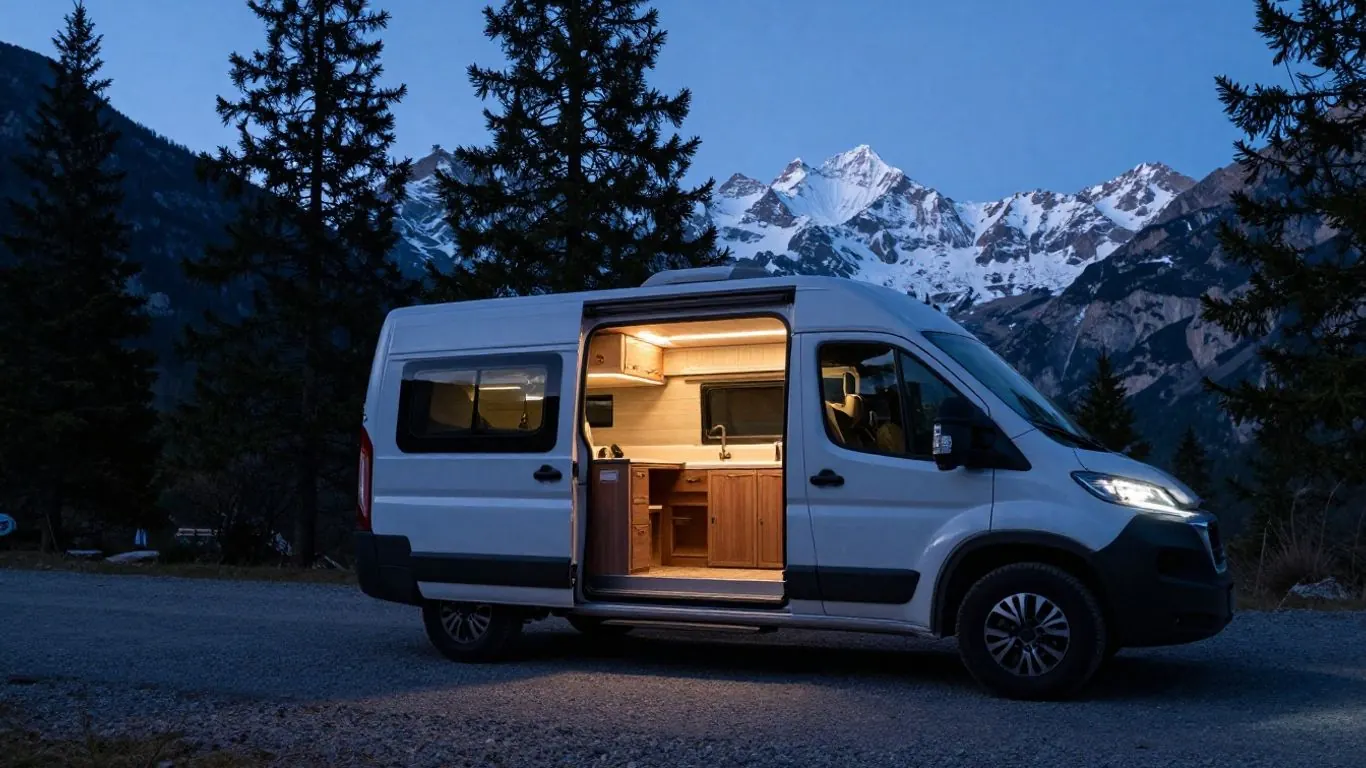
Transport Canada advises travellers to use current weather warnings and provincial or territorial traveller-information services when planning a drive. Check the information again on travel days, share the itinerary with a trusted contact when appropriate, and follow local closure or safety directions. This is not a promise that a route will remain open or safe.
Transport Canada: planning your trip
Keep bookings and assumptions separate
Record the exact vehicle agreement, pickup/return terms, reservation references and provider contact details. This clean rewrite intentionally does not quote rental prices, driving times, vehicle specifications, insurance coverage, campsite availability or seasonal guarantees. Verify those details with the responsible provider for the journey you are taking.
Putting the decisions in order
Decide in this sequence: dates, start and finish city, number of travellers and drivers, then vehicle type. Only after those are fixed is it worth looking at specific campgrounds and day-by-day routing.
Each early decision narrows the next one. A one-way route limits which companies and vehicles are available, and a large vehicle limits which campgrounds will take it.
A planning order that works
- Travel dates and how flexible they are.
- Start and finish city, which also decides flights.
- Travellers, drivers and any special needs.
- Vehicle type and size.
- Key campground nights, booked as soon as reservations open.
- Day-by-day routing between those nights.
- Add-ons such as kitchen kits, bedding and insurance upgrades.
The Plan your trip page follows the same order and adds what to have ready for an enquiry.
Common early mistakes
Booking flights before confirming a one-way drop-off, choosing a vehicle larger than the campgrounds on the route accept, and planning every day as a driving day are the most common problems. Each is easy to avoid if the decisions are taken in order.
Where to go next
With the main decisions made, these guides cover the next layer: choosing an RV type, pick-up planning, campgrounds and RV parks and budgeting. Each one assumes you already know your dates, route shape and group.
How much time to allow
As a rough guide, a single region such as the Rockies or Nova Scotia needs at least a week to enjoy without rushing, and two weeks gives time for multi-night stays. Combining regions usually needs three weeks or more, and a coast-to-coast trip is typically planned over 30 to 45 days. If your time is fixed, choose the region to fit it rather than shortening every stop.
Remember to count the pick-up and return days, which are rarely full travel days.
Frequently asked questions
What should I decide before reserving anything?
Your start and finish point, available days, the people travelling and their needs, and the vehicle. Those set the limits for everything else.
Can I trust a campground shown on an old map?
No. Use the current destination page and reservation service to confirm the site type, equipment limits and operating period.
How much flexibility should I build in?
Enough to absorb weather, road works, wildlife, fires or closures. A buffer day and a backup campground for key nights are a good start.