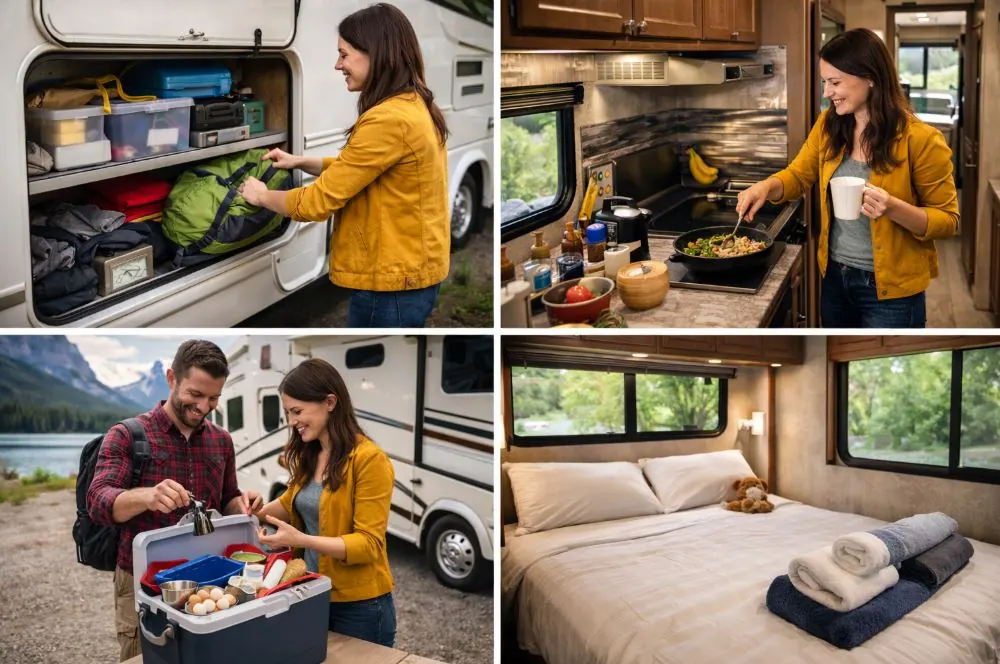
For the first three nights of a motorhome trip, plan meals that need one pan, little prep and almost no cooking skill in an unfamiliar kitchen: a no-cook first dinner, a one-pot pasta on night two and a quick stovetop meal on night three that uses up leftovers. Buy everything in a single grocery shop on pick-up day and you will not need a store again until day four.
Why the first nights need a different plan
Pick-up day is long. You collect the motorhome, learn its systems, drive to your first campground and set up, often after a flight. A few practical points shape what you can cook:
- The fridge starts warm. CanaDream's guest guide says its RV fridges can take up to six hours to cool after they are switched on, and that frozen water bottles in the bottom drawer help hold temperature. Buy chilled food last, and keep the first night's dinner simple.
- The microwave needs shore power. CanaDream's guide notes that its microwaves run only when the RV is plugged into a campsite power pole, and many other rentals work the same way, so do not plan on it at an unserviced site.
- The stove is propane. It works anywhere, but it is small, so plan around one or two burners.
- Fire bans happen. Parks Canada's Banff camping rules remind campers to bring a stove because fire bans can be introduced at short notice. Do not count on a campfire to cook dinner.
The one-shop grocery list
This list feeds two adults for three dinners, three breakfasts and two or three lunches. Scale it up for a family.
| Category | Buy |
|---|---|
| Ready-cooked | 1 rotisserie chicken, 1 bag pre-washed salad or salad kit |
| Fresh | Cherry tomatoes, 2 peppers, 1 onion, cucumber, a bag of baby spinach, bananas, apples, berries |
| Dairy and eggs | Dozen eggs, shredded cheese, plain or Greek yogurt, butter, milk or a plant-based alternative |
| Pantry | Short pasta, jar of tomato sauce, can of chickpeas or white beans, quick-cook rice, tortillas, bread, granola or oats, peanut butter, salsa |
| Seasoning | Salt, pepper, a small bottle of oil, one all-purpose spice mix |
| Drinks | Large bottles of water, juice, hot chocolate mix, herbal tea |
| Supplies | Paper towel, zip-top bags, foil, dish soap, a scrubber, garbage bags |
Check your rental's kitchen kit before you shop so you do not buy duplicates. Our guide to kitchen kits and gear covers what is usually supplied and what is worth adding, and our page on what is included with your motorhome rental explains the standard extras.
Lunches and drive-day snacks
Lunch on the first days should need no stove at all, so you can eat at a viewpoint or picnic area without unpacking. Make sandwiches or wraps with peanut butter, cheese and cucumber, or leftover chicken, before you leave camp. Keep a bag of apples, bananas, crackers and cheese within reach of the passenger seat, and fill water bottles each morning. On cool mountain days, a thermos of hot chocolate or herbal tea made at breakfast is welcome at a midday stop.
Night one: no-cook chicken wraps
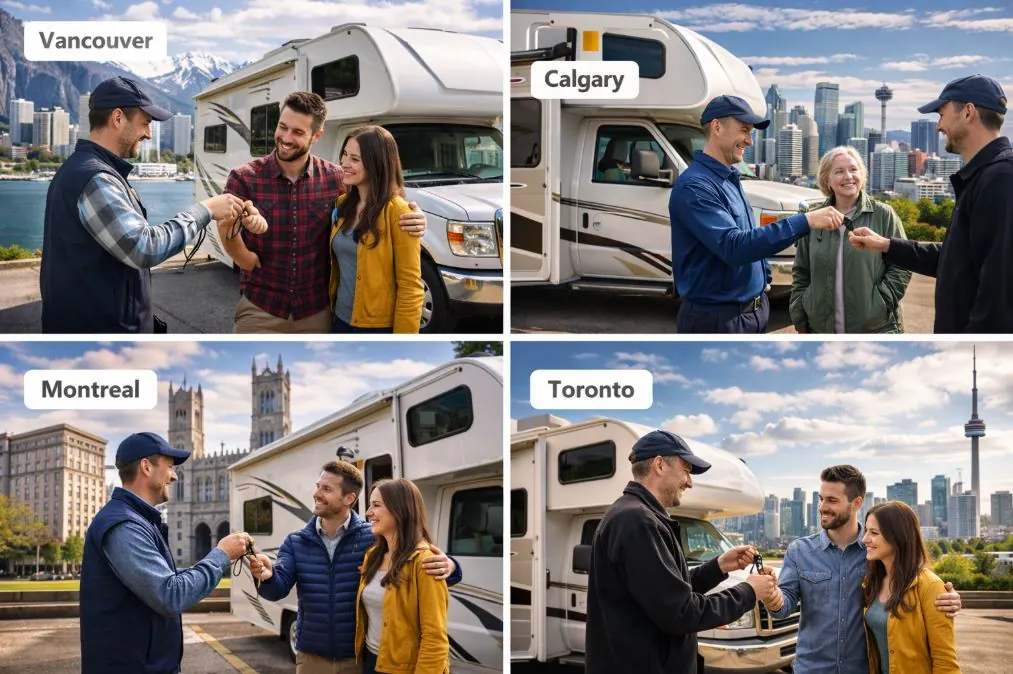
Arrive, plug in if you have power, and eat within 15 minutes.
- Pull half the rotisserie chicken off the bone and keep the rest in a sealed container for night three.
- Warm tortillas briefly in a dry frying pan, or skip this step.
- Fill with chicken, salad, sliced peppers, cheese and salsa.
- Fruit and yogurt for dessert.
Breakfast the next morning: yogurt with granola and berries, or peanut butter toast made in the frying pan.
Night two: one-pot pasta
By night two you know where the pots are. This uses one pot and one burner:
- Bring a pot of salted water to a boil and cook the pasta. Save a cup of the cooking water, then drain.
- Return the pot to low heat. Add a little oil, the chopped onion and pepper, and cook for 5 minutes.
- Stir in the tomato sauce and drained chickpeas or beans, then the pasta and a splash of the saved water.
- Fold in a handful of spinach until it wilts and top with cheese.
Make extra if you want a cold pasta salad for lunch the next day. Breakfast: scrambled eggs with cheese and tomatoes in the frying pan.
Night three: chicken fried rice
This uses up the rest of the chicken and vegetables.
- Cook quick-cook rice in the pot, or use leftover rice if you made some earlier.
- In the frying pan, soften the remaining onion and pepper in oil.
- Add the chicken and heat it through until it is steaming hot. Health Canada's safe internal temperature for leftovers is 74°C.
- Push everything aside, scramble two eggs in the pan, then mix in the rice and season.
On day four, do a proper shop for the rest of the trip, now that you know how much your fridge holds.
Food safety in a small RV fridge
RV fridges are smaller and work harder than a home fridge, especially on hot days or when the door is opened often. Health Canada's food storage guidance applies on the road too:
- Keep the fridge at 4°C or colder. A cheap fridge thermometer is worth packing.
- Store raw meat in sealed containers on the bottom shelf so juices cannot drip.
- Use raw ground meat within 1 to 2 days and other raw beef or pork within 2 to 4 days. This is why the first three nights avoid raw meat.
- When you do cook raw meat later in the trip, use Health Canada's safe internal temperatures: 71°C for ground beef and pork, 74°C for chicken pieces.
- The fridge must be level to work properly, so level the motorhome as soon as you park.
Dishes, water and wildlife
- Wash dishes in the RV sink if you have water hookups or a full fresh tank. In Banff campgrounds, dishwater goes down outdoor sinks or the sani-dump, not into bathroom sinks, bushes or onto the ground.
- Scrape plates into the garbage before washing, to keep food out of the grey tank.
- Store food inside the motorhome. In the mountain national parks, food, coolers, dishes and garbage must be kept in your hard-sided RV or a food locker whenever you are not using them. Never leave a cooler on the picnic table.
First-time renters will find more on the pick-up day routine in our first-timer's guide.
Bottom line
Shop once, cook simply and save ambitious meals for later in the trip, once you know the kitchen. If you want help choosing a motorhome with the kitchen size and kit that suit how you like to cook, we can match it for you.
Frequently asked questions
Should I buy groceries before or after picking up the motorhome?
After, if you can. Buying chilled food once the fridge is switched on avoids carrying perishables around for hours. Ask your depot where the nearest supermarket is.
Can I use the oven in a rental motorhome?
Many have a small propane oven lit from a pilot, and CanaDream's guide says it takes 10 to 15 minutes to reach temperature. For the first nights, stovetop meals are faster and easier.
Use this guide for trip ideas, not a current quotation or a guarantee of access, safety, inclusions or availability. Confirm the requirements and conditions for your dates, destination and provider before booking.