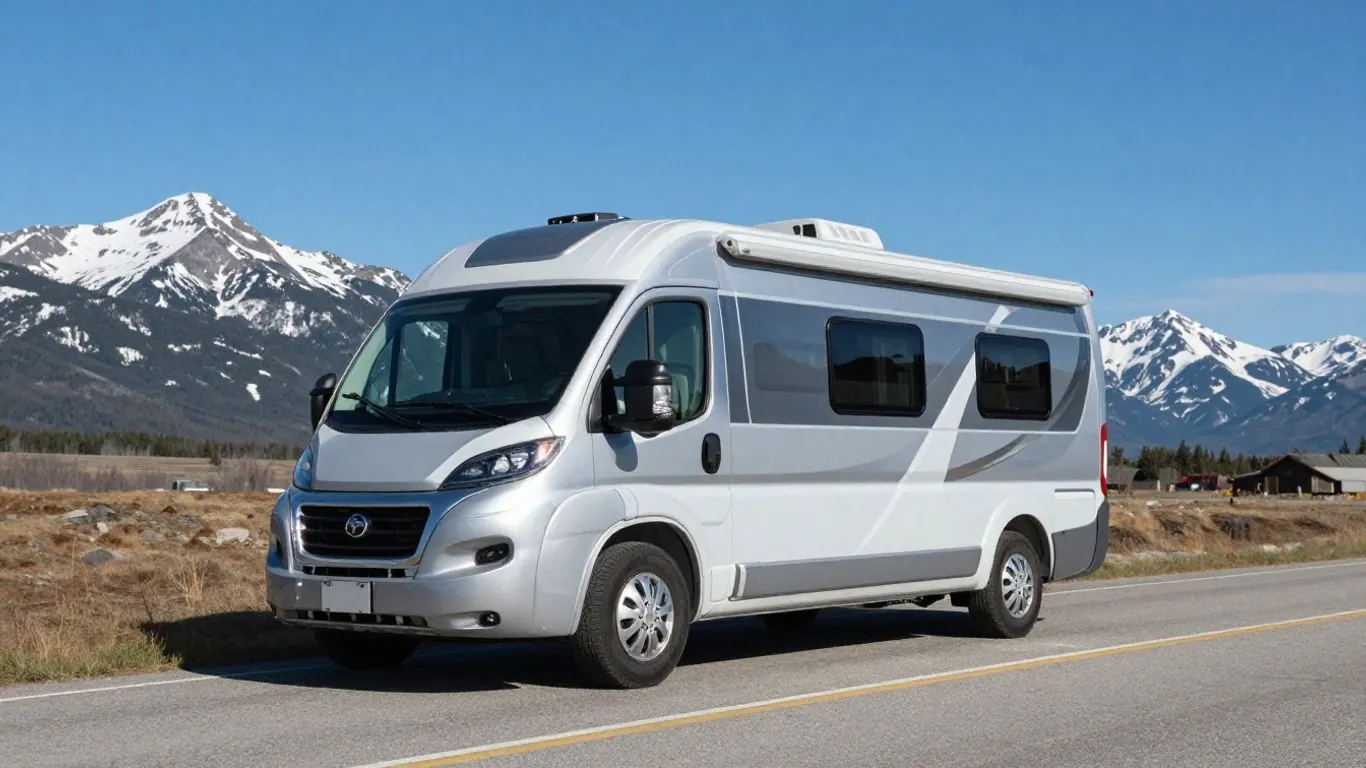
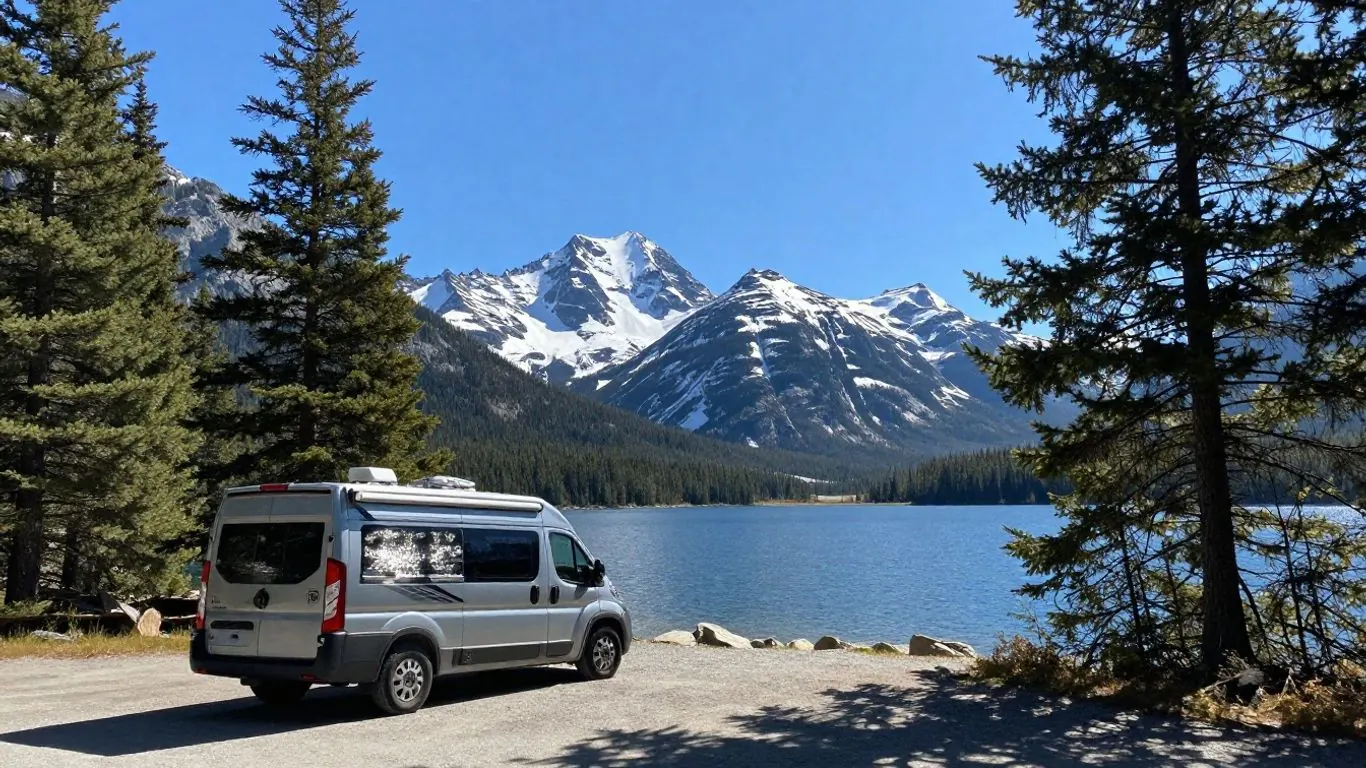
Driving a motorhome for the first time is easier than most people expect: rental motorhomes in Canada are driven on a regular licence and handle much like a large van. The differences that matter are visibility (you drive on your side mirrors), tail swing on turns, longer stopping distances and height clearance. Spend your first hour in a quiet lot practising those four things and the open highway becomes the easy part.
This guide covers the setup and habits we walk first-time clients through before they leave the depot, plus a simple practice routine you can follow on pick-up day.
Before you turn the key: the depot walk-around
Most rental companies give you a vehicle orientation at pick-up. Use it to learn the controls you will need while driving, not only the campsite systems. Ask the staff to show you the following, and write the answers on a card you keep on the dash:
- Exact height, length and width. CanaDream notes that the most common first-timer mistake is forgetting the vehicle will not fit under canopies, low bridges, drive-throughs and parkades.
- Tow/Haul or engine-braking mode, and how to engage it on descents.
- Fuel type and tank size, so you know your range before remote stretches.
- Slide-out, step and awning status lights, if fitted.
- Backup camera controls and how to switch views.
Then do your own walk-around: compartments closed and locked, slide-outs retracted, step stowed, power and water disconnected, and loose items inside put away. Fraserway's driving tips make the same point: secure everything in the living area, not only the people in the seats.
Mirror and seat setup
A motorhome usually has no useful rear-view mirror, so the side mirrors do the work. Set them before you move, with the seat already adjusted to your driving position.
- Flat (upper) mirrors: angle each one so you see a thin strip of the motorhome's side along the inner edge and the lane behind you filling the rest. The horizon should sit roughly in the middle.
- Convex (lower) mirrors: aim these down and out to show the area beside the rear wheels and the lane next to you. They make objects look farther away than they are.
- Check the blind spot: have someone walk slowly from the rear corner to the front door on each side while you watch where they disappear and reappear. Those gaps are where a car can hide.
- Backup camera: treat it as a helper, not a replacement for mirrors or a spotter.
Re-check the mirrors after every fuel stop. Pumps, car washes and campground branches knock them out of position more often than you would think.
Tail swing and turning
The rear of a motorhome overhangs the back axle. When you turn, that overhang swings the opposite way, out toward the side you are turning away from. On a long Class C this is the part of the vehicle most likely to clip a post, pump island or parked car.
- Pull farther forward before turning. The rear wheels track inside the front wheels, so start right turns later and wider than in a car.
- Watch the opposite mirror as you turn. Leaving a fuel station or a tight parking spot, check that the rear corner clears anything beside it.
- Slow right down. Fraserway advises slowing sooner than you would in your own vehicle and going extra wide on right turns.
- Plan fuel stops. Choose stations where you can drive through the pumps without reversing, and leave space from the pump so you can get out cleanly.
Braking distance, speed and hills
A loaded motorhome weighs far more than a car, so it takes noticeably longer to stop. Build the extra room in from the start rather than discovering it in an emergency.
| Situation | What to do |
|---|---|
| Normal highway driving | Leave a much bigger gap than you would in a car. Fraserway suggests at least two full vehicle lengths; counting a few extra seconds behind the vehicle ahead is easier to judge. |
| Rain, wind or poor visibility | Slow down and widen the gap further. CanaDream recommends leaving at least three times your usual space in bad weather. |
| Long descents | Use Tow/Haul or a lower gear so the engine holds your speed. Riding the brakes can overheat them. |
| Climbs | Stay right, let traffic pass and use pull-outs. Speed will drop on long grades; that is normal. |
| Crosswinds | Keep both hands on the wheel and reduce speed. High-sided vehicles feel gusts on open prairie and bridges. |
Stay in the right lane if you are slower than other traffic, and when changing lanes remember that your vehicle is far longer than your car: wait until you can see the whole of the other vehicle in your convex mirror before moving over.
A first-hour practice routine
Before joining traffic, find a large, empty parking area (ask at the depot whether there is a suitable spot nearby). Bring a passenger to act as spotter. Work through these drills in order:
- Straight-line stops (5 minutes). Accelerate gently to parking-lot speed and brake to a smooth stop. Feel how much earlier you need to start braking.
- Right and left turns around a marker (10 minutes). Use a light post or line as a corner. Practise pulling forward before turning and watching the rear corner in the mirror.
- Tail-swing check (5 minutes). Have your spotter stand safely clear beside a line while you turn away from it, so you can see how far the rear swings.
- Lane positioning (10 minutes). Drive along painted lines and check your mirrors to learn where the wheels sit relative to the lines.
- Reversing with a spotter (15 minutes). Agree on hand signals first. The rule is simple: if you lose sight of your spotter in the mirror, stop.
- Reverse into a marked bay (15 minutes). Practise the motion you will use at a campsite, setting up wide and backing in from the driver's side where you can see best.
Then plan an easy first drive: short distance, daylight, no city centre, and a campground booked in advance. If backing in worries you, book a pull-through site for the first few nights.
Everyday habits on the road
- Check conditions each morning. Use the official road report for the province you are in, such as DriveBC in British Columbia or 511 Alberta, before you set off.
- Seat belts on for everyone while moving. Nobody walks around the cabin, cooks or uses the washroom while the vehicle is in motion; pull over safely first.
- Avoid driving at dusk and after dark on rural roads, when wildlife is hardest to see. Our safety planning notes cover wildlife, smoke and road conditions in more detail.
- Look up as well as ahead. Drive-through restaurants, hotel entrances and parkades are off limits; park at the edge of large lots instead.
- Keep days realistic. Motorhome averages are slower than car averages once you add stops, set-up and hills.
Planning notes
Choose a vehicle size that matches your confidence: a campervan or compact Class C is far easier for a first trip than the largest motorhome on the lot, and our guide to RV types in Canada compares them. For the bigger first-trip decisions, read motorhome hire for first-timers. When you are ready, Far & Away Adventures can match the vehicle, pick-up city and first-night campground to your experience level.
Frequently asked questions
Do I need a special licence to drive a rental motorhome in Canada?
For standard rental motorhomes and campervans, a valid full driver's licence is normally enough, but each rental company sets its own minimum age and licence rules. Confirm the requirements for your exact vehicle before booking.
Is a campervan easier to drive than a Class C motorhome?
Yes. A campervan is narrower, shorter and lower, so it fits regular parking spaces more often and has less tail swing. A Class C gives more living space but needs more care in turns, fuel stations and parking lots.
Should I avoid cities on my first day?
Where possible, yes. Plan your first route to leave the depot toward quieter highways, and do grocery shopping at a large store with an open parking lot on the way out of town.
Use this guide for trip ideas, not a current quotation or a guarantee of access, safety, inclusions or availability. Confirm the requirements and conditions for your dates, destination and provider before booking.