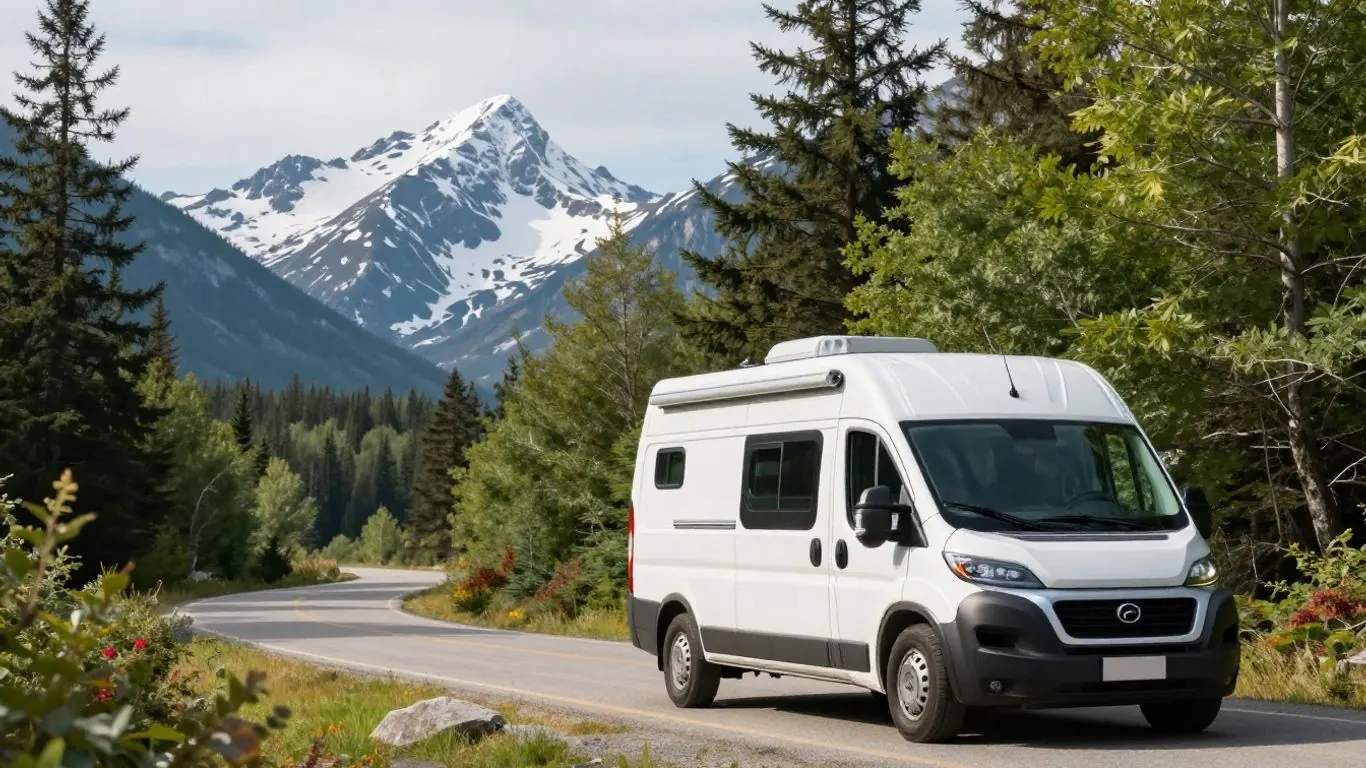
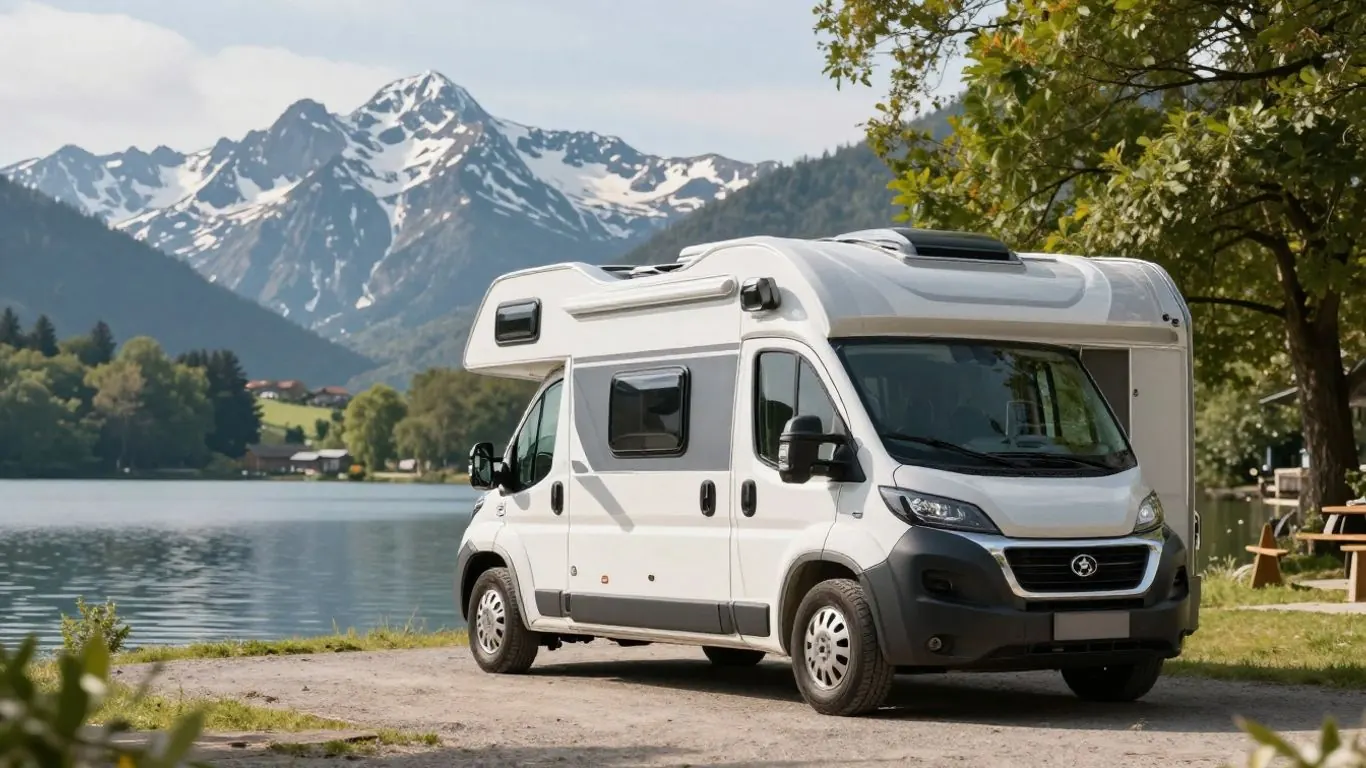
The fastest Calgary to Vancouver RV road trip is the Trans-Canada Highway through Banff, Yoho and Glacier national parks, roughly 990 km and four to five driving days at a motorhome pace. The Crowsnest Highway (Highway 3) along the US border is longer at about 1,280 km, with more mountain passes and quieter towns. The Yellowhead option via Jasper and Mount Robson is about 1,220 km and suits travellers who want both Banff and Jasper in one trip.
Below we compare all three by distance, days, passes and campground choice, so you can match the route to your time and your comfort behind the wheel.
The three routes at a glance
| Route | Approx. distance | Suggested days | Main passes (elevation) | Best for |
|---|---|---|---|---|
| Trans-Canada (Hwy 1, then Coquihalla Hwy 5 or Fraser Canyon) | 990 km | 4 to 7 | Kicking Horse 1,643 m, Rogers 1,327 m, Coquihalla 1,244 m | First-timers, shorter trips, national park campgrounds |
| Crowsnest (Hwy 3) | 1,280 km | 6 to 9 | Crowsnest 1,358 m, Kootenay 1,774 m, Bonanza 1,535 m, Allison 1,342 m | Repeat visitors, lake towns, the Okanagan and Manning Park |
| Yellowhead (Icefields Parkway, Hwy 16, Hwy 5) | 1,220 km | 7 to 10 | Yellowhead 1,066 m, Coquihalla 1,244 m | Banff plus Jasper, Mount Robson, wildlife |
Distances are approximate driving distances between the two cities and change with your exact stops. Pass elevations come from the BC government's list of major summits and passes, which also links grade profiles for each pass. Suggested days assume three to five hours of driving per day, which is a comfortable pace in a large motorhome with sightseeing stops.
Route 1: the Trans-Canada through the national parks
This is the classic line and the one most of our clients choose for a one-way trip. From Calgary you climb into Banff National Park within about 90 minutes, then continue over Kicking Horse Pass into Yoho, down to Golden, over Rogers Pass in Glacier National Park and on to Revelstoke. From there the highway follows the Shuswap to Kamloops, where you choose between the Coquihalla (Highway 5) through Merritt to Hope, or the slower Fraser Canyon section of Highway 1.
What to expect behind the wheel
- Grades: the climbs on either side of Kicking Horse and Rogers passes are long but on a well-engineered highway. Use lower gears on the descents rather than riding the brakes.
- Coquihalla: a four-lane divided freeway with Surrey Lake Summit (1,444 m) and Coquihalla Pass (1,244 m). It is fast but steep, and weather can change quickly near the summit.
- Traffic: expect heavy truck traffic and summer congestion around Banff and Lake Louise.
Campgrounds along the way
Campground density is the strength of this route. Banff has large RV-friendly campgrounds at Tunnel Mountain and Lake Louise, Yoho's Kicking Horse Campground sits near Field, Glacier National Park has campgrounds close to Rogers Pass, and private RV parks cluster around Golden, Revelstoke, the Shuswap and Kamloops. Our guide to Banff campgrounds for RVs covers which ones take larger motorhomes.
A sample five-day pace
- Calgary pick-up, short drive to Banff.
- Lake Louise and Yoho, overnight near Field or Golden.
- Rogers Pass to Revelstoke.
- Shuswap or Kamloops.
- Coquihalla to Vancouver.
Add two extra nights in Banff if this is your only Rockies stay.
Route 2: the Crowsnest Highway along the border
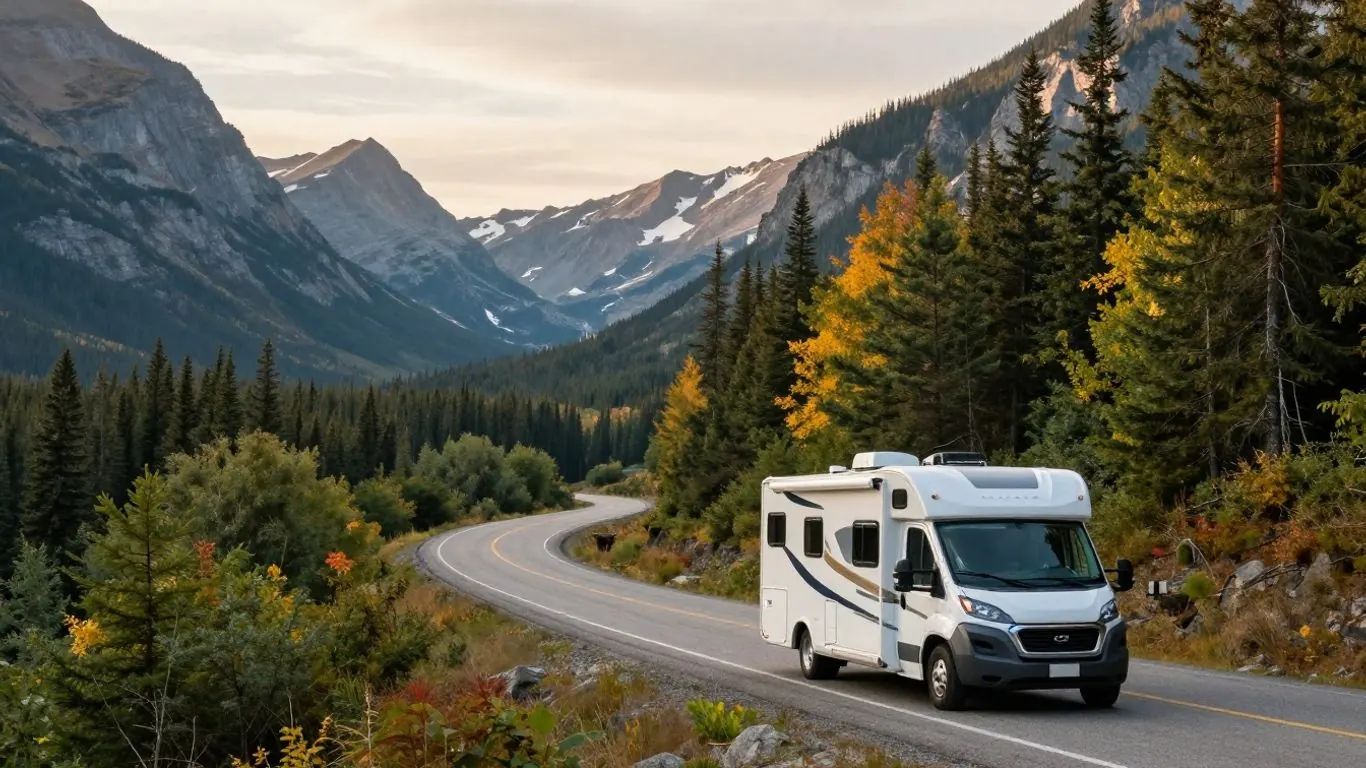
Highway 3 crosses southern British Columbia from the Alberta border to Hope. From Calgary you head south through the foothills to the Crowsnest Pass, then west through Fernie, Cranbrook and Creston, over Kootenay Pass to Salmo and Castlegar, through Grand Forks and Osoyoos, and finally through E.C. Manning Provincial Park to Hope.
Why choose it
- Variety: forested mountain valleys in the Kootenays, then the dry south Okanagan landscape around Osoyoos.
- Fewer crowds than the Banff corridor in July and August.
- Provincial park camping: Manning Park alone has frontcountry campgrounds at Lightning Lake, Coldspring, Hampton and Mule Deer, according to BC Parks, plus a resort-run RV campground.
The trade-off: passes
Highway 3 is mostly a two-lane rural highway with a long sequence of summits. Kootenay Pass between Salmo and Creston is the highest on the BC list at 1,774 m, and you also cross Bonanza Pass, Anarchist Summit, Sunday Summit and Allison Pass. None of these is unusual for a confident driver, but the cumulative climbing makes for slower, more tiring days. If this is your first motorhome trip, read our tips on driving a motorhome for the first time before committing to this route.
Campgrounds are spread out rather than clustered, so book the key nights in July and August and keep the daily distance modest.
Route 3: the Yellowhead via Jasper and Mount Robson
This route is really a combination: the Icefields Parkway from Lake Louise to Jasper, Highway 16 west over Yellowhead Pass, then Highway 5 south from Tête Jaune Cache through Valemount and Clearwater to Kamloops, and the Coquihalla to Vancouver.
- Gentle pass: Yellowhead Pass is the lowest crossing of the three routes at 1,066 m.
- Mount Robson: BC Parks describes the 63 km Mount Robson corridor along Highway 16, with frontcountry campgrounds at Robson Meadows and Robson River. Check the Mount Robson Park page for current advisories.
- Jasper campgrounds: Whistlers and Wapiti near the town of Jasper can take most sizes of motorhomes. Reservations are strongly advised from June through September.
The Icefields Parkway itself has limited services and long gaps between fuel stops, so fill up before you leave Lake Louise or Jasper. Our Icefields Parkway motorhome guide covers stops and timing on that section.
Highway 5 between Valemount and Kamloops is long and lightly serviced in places. Break it with a night around Valemount or Clearwater so neither day runs long.
How to choose
| If you… | Choose |
|---|---|
| Have five to seven days and want the Rockies highlights | Trans-Canada |
| Have already seen Banff and want somewhere new | Crowsnest |
| Want Banff and Jasper without backtracking | Yellowhead |
| Are nervous about passes | Trans-Canada with short days, or Yellowhead |
| Need serviced campgrounds most nights | Trans-Canada |
Many travellers combine routes for a loop: out on the Trans-Canada and back on Highway 3, or the reverse. That avoids one-way fees but roughly doubles the driving, so allow at least 12 to 14 days. Our Western Canada road trip itinerary shows how a longer loop fits together.
Seasons, tires and road reports
- Best window: mid-June to mid-September gives the most reliable pass conditions and full campground operations.
- Winter tire rules: the BC government requires winter tires or chains on most BC routes from October 1, extended to April 30 on mountain passes and high snowfall routes. Ask your rental company how its vehicles are equipped if you travel in late September or October.
- Road conditions: check DriveBC before each driving day for closures, construction and avalanche control. Alberta has its own 511 service for the Calgary end.
- Wildlife: elk, bighorn sheep and bears are common on all three routes. Slow down and use pullouts rather than stopping on the road.
Planning notes
Decide the direction first, because rental depots, one-way fees and ferry plans all follow from it. Most travellers pick up in Calgary so the Rockies come early in the trip, then return in Vancouver; if you prefer the reverse, see what to plan for when picking up in Vancouver. Book Banff and Jasper campgrounds as soon as reservations open. Far & Away Adventures can match the route, campground nights and rental dates for you.
Frequently asked questions
Can I drive Calgary to Vancouver in two days in a motorhome?
It is possible on the Trans-Canada, but it means two long days of eight or more hours with no time in the parks. We suggest at least four nights, and five to seven if you want to see Banff, Yoho and Glacier properly.
Which route has the steepest driving?
The Crowsnest Highway has the most passes, including Kootenay Pass at 1,774 m, the highest on BC's list of major highway summits. The Yellowhead option crosses the lowest pass of the three.
Is a one-way rental from Calgary to Vancouver common?
Yes, it is one of the most popular one-way pairs in Canada. One-way fees vary by company and season, so compare them alongside the daily rate.
Use this guide for trip ideas, not a current quotation or a guarantee of access, safety, inclusions or availability. Confirm the requirements and conditions for your dates, destination and provider before booking.